
Calories Burned Calculator
Discover how many calories you burn during exercise. Our free Calories Burned Calculator gives accurate estimates based on activity, weight, and duration.


Result
377 calories
There was an error with your calculation.
Last updated: June 26, 2026
Table of Contents
- Factors That Affect Your Calories Burned
- Body Mass, Activity Duration, and Intensity
- The Measurement of Metabolic Equivalent of Task (MET)
- Basal Metabolic Rate (BMR)
- A Person's Age, Gender, and Muscle Mass
- Environmental Factors
- Current Fitness Levels
- Hormonal Status
- Pre-Existing Medical Conditions
- How the Daily Calorie Burn Calculator Works
- Estimating Daily Calories Burned is Important
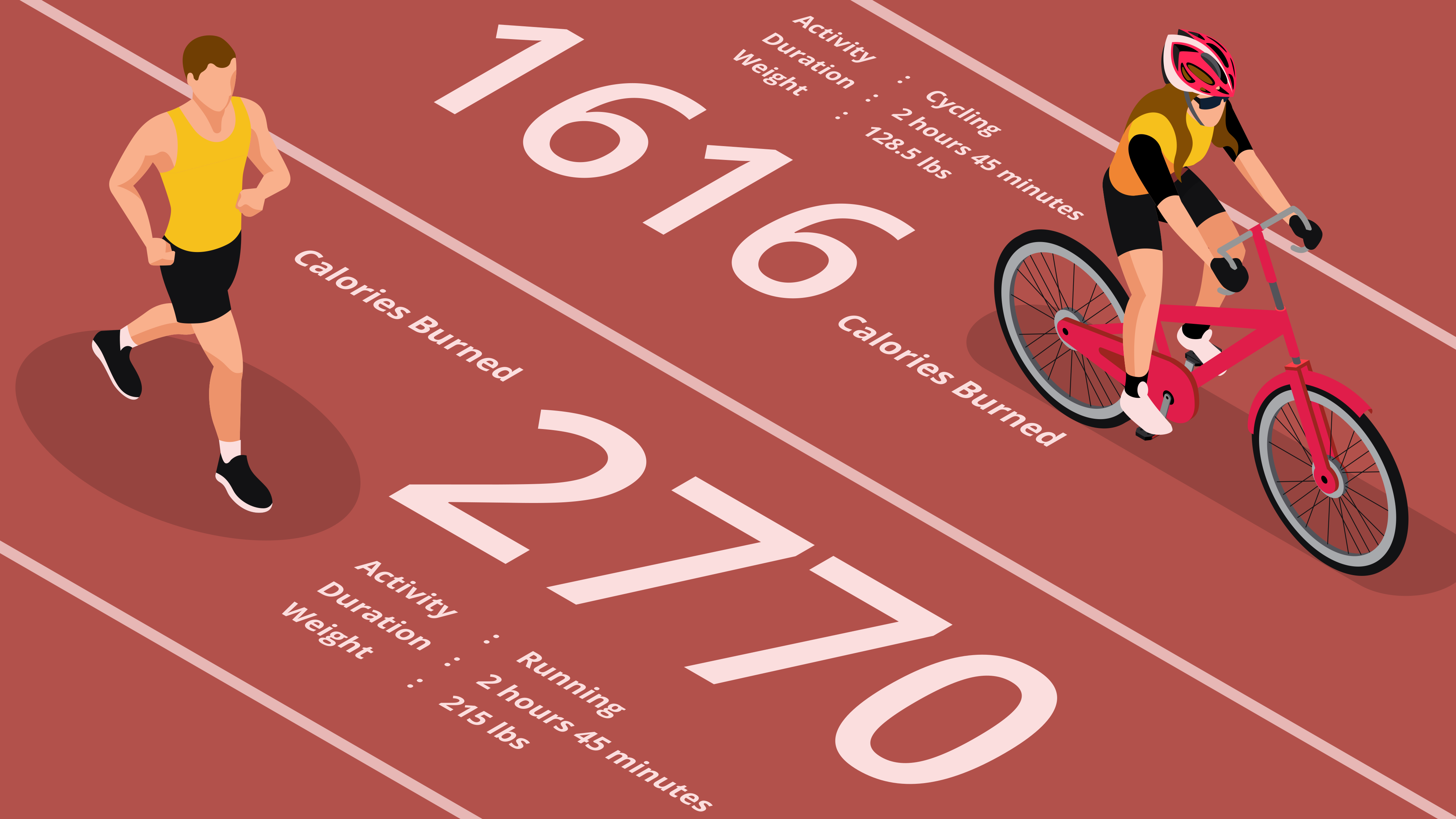
Looking for an accurate way to track your fitness progress? You're in the right place. Our advanced calories burned calculator takes the guesswork out of your workouts to help you achieve your goals faster.
Whether you're walking, running, or cycling, this intuitive calorie calculator estimates your energy expenditure based on the specific type, duration, and intensity of your activity. If you want a reliable way to monitor your daily calorie burn and elevate your fitness journey, keep reading to learn exactly how it works!
Factors That Affect Your Calories Burned
Determining the exact number of calories you burn through physical activity involves several dynamic variables. Our calorie burn calculator automatically accounts for these key elements—ranging from your body weight and workout duration to the Metabolic Equivalent of Task (MET). Let's take a closer look at the primary factors that influence your daily caloric expenditure.
Body Mass, Activity Duration, and Intensity
Your body weight plays a crucial role in determining how many calories you burn, even when you're completely at rest. Because it takes more energy to move and sustain a larger body, heavier individuals naturally burn more calories. For example, assuming all other conditions are equal, a person weighing 200 pounds will burn significantly more calories running one mile than someone who weighs 100 pounds.
The duration and intensity of your exercise also drastically impact your overall calorie burn. Naturally, the longer you exercise, the more calories you expend. However, intensity is the ultimate multiplier. A person walking one mile in an hour will burn far fewer calories than someone who walks five miles in that same hour at a brisk, high-intensity pace.
The Measurement of Metabolic Equivalent of Task (MET)
The most accurate way to measure exercise intensity is by tracking oxygen consumption. There is a direct correlation between how hard you work out and the amount of oxygen your body demands. As exercise intensity ramps up, your oxygen consumption rises right along with it.
Comparing your oxygen consumption during exercise to your resting baseline provides a clear picture of a workout's metabolic demands. Unlike heart rate, which can fluctuate based on external factors, oxygen consumption is closely tied to body mass. This allows scientists to establish standard oxygen consumption rates for specific exercises based on weight.
This standard is measured in MET (Metabolic Equivalent of Task). The MET value represents the ratio of energy a person expends during a specific physical task relative to their body mass and a resting baseline. The standard reference point—the energy an average person uses while sitting quietly—is roughly equivalent to 3.5 mL of oxygen per kilogram of body weight per minute.
Researchers determined this value experimentally by measuring the resting metabolic rate of a healthy 40-year-old male weighing 154 pounds. Therefore, a MET value of 1 represents your energy expenditure at rest. A MET value of 2 means you require twice as much energy as you do at rest, a MET of 8 means eight times as much, and so on.
Exercises are generally categorized into light, moderate, or vigorous intensity based on these values. For instance, walking slowly is a light-intensity exercise with a MET of about 2.0. Playing doubles tennis is a moderate-intensity activity with a MET of 5.0, while jumping rope at a rapid pace of 100 jumps per minute is a vigorous-intensity exercise boasting an 11.0 MET.
Basal Metabolic Rate (BMR)
Your Basal Metabolic Rate (BMR) is the amount of energy your body requires at rest to maintain essential, life-sustaining functions like breathing, cellular repair, and blood circulation. Believe it or not, your BMR accounts for the vast majority of the calories you burn in a single day.
Factors such as age, height, weight, and muscle mass all influence this baseline number. A person with a higher BMR inherently burns more calories at rest than someone with a lower BMR. If you want to increase your daily calorie burn round-the-clock, one of the most effective strategies is to boost your BMR through strength training and muscle building.
A Person's Age, Gender, and Muscle Mass
Your biological makeup—specifically your age, gender, and muscle mass—directly impacts how efficiently you burn calories during physical activity.
- Age: As we get older, our bodies tend to become less efficient at burning calories. This is largely due to the natural, gradual decline of muscle mass associated with aging.
- Muscle mass: Lean muscle is highly metabolically active, meaning it requires significantly more energy to sustain and move than fat tissue. The more muscle you carry, the more calories you'll burn during both physical activity and rest. This is exactly why resistance training is vital for maximizing caloric expenditure.
- Gender: Generally, men burn more calories than women during physical activity. This is primarily because men tend to have a larger overall body size and a higher percentage of lean muscle mass, leading to a naturally faster metabolism.
Environmental Factors
Where you work out matters. Environmental variables like temperature, altitude, and humidity can all influence your energy expenditure.
- Temperature: When you exercise in the heat, your cardiovascular system has to work overtime to cool your body down, which can increase your overall calorie burn. However, extreme temperatures can be dangerous and typically force you to lower your workout intensity, which ultimately reduces the total number of calories burned.
- Altitude: At higher altitudes, the air is thinner, and oxygen concentration is lower. Your body has to increase its metabolic rate to pump adequate oxygen to your working muscles, often resulting in a higher caloric expenditure compared to doing the exact same workout at sea level. Keep in mind that as your body acclimatizes to the altitude over time, this calorie-burning advantage diminishes.
- Humidity: High humidity prevents sweat from evaporating quickly, making it much harder for your body to cool itself. While this increased effort can cause a minor bump in calories burned, the uncomfortable conditions usually lead to shorter, less intense workouts. Conversely, low humidity aids cooling but increases the risk of dehydration, which can also derail a high-intensity session.
Current Fitness Levels
Interestingly, the fitter you are, the more efficient your body becomes. A highly conditioned athlete will actually burn fewer calories performing the exact same exercise as a beginner. As your cardiovascular and muscular systems adapt to regular training, they require less energy to complete familiar tasks. To keep burning a high number of calories, fit individuals must continuously increase the intensity, duration, or complexity of their workouts.
Hormonal Status
Hormonal fluctuations play a significant role in your metabolic rate. For instance, pregnancy triggers major hormonal shifts that alter daily energy requirements. While pregnant women burn more calories to support fetal development, they also experience increased appetites, making it harder to maintain a calorie deficit if weight management is the goal post-pregnancy.
Menopause is another major hormonal milestone that affects calorie burn. As estrogen levels drop, women frequently experience a decline in lean muscle mass and an increase in body fat. This shift naturally slows down the metabolism, leading to a reduction in the number of calories burned during physical activity.
Pre-Existing Medical Conditions
Certain underlying health conditions can drastically impact your body's ability to expend energy:
- Thyroid disorders: The thyroid gland is the master regulator of your metabolism. If it is underactive (hypothyroidism), your metabolic rate slows down, meaning you burn fewer calories at rest and during exercise. People with this condition often find it highly challenging to lose weight.
- Diabetes: Individuals with diabetes frequently deal with insulin resistance, making it difficult for their cells to absorb and utilize glucose for energy efficiently. This metabolic hurdle can result in fewer calories burned during physical activity.
- Cardiovascular Conditions: Heart conditions can limit the amount of oxygen efficiently delivered to muscles, often making it unsafe or impossible to sustain the high-intensity exercises necessary for maximum calorie burn.
How the Daily Calorie Burn Calculator Works
To ensure accurate results, our calculator utilizes a scientifically backed formula to estimate your energy expenditure:
Calories = (Time × MET × 3.5 × Body Weight) / 200
where Time is in minutes and Body Weight is in kilograms.
The core principle behind our calories burned calculator is simple: physical activity requires energy, and that energy is measured in calories. The longer you sustain an activity and the higher its intensity, the more calories you burn.
This metabolic calculator pulls data from standardized scientific studies to assign the correct Metabolic Equivalent of Task (MET) to your chosen activity. By combining this MET value with your exact body weight and your total exercise time, the tool can accurately estimate your caloric expenditure.
It's important to remember that any daily calorie burn estimate is just an approximation. Individual results will vary based on your personal fitness level, hormonal balance, and underlying medical conditions.
Always consult with a healthcare professional before starting or intensifying any new exercise routine.
Estimating Daily Calories Burned is Important
Why should you care about tracking your energy expenditure? Here are the top reasons why monitoring your daily calorie burn is a game-changer for your fitness goals:
Improving Overall Health
Maintaining a healthy body weight is foundational to your long-term well-being. By understanding exactly how many calories you burn each day, you can make smarter, data-driven decisions about your diet and exercise routines that protect and improve your health.
Consistent physical activity is proven to lower the risk of chronic illnesses, including heart disease, type 2 diabetes, and certain cancers. Tracking your calorie burn ensures you are getting the appropriate amount of exercise needed to maintain a healthy weight and thrive.
Setting Realistic Goals
Knowledge is power when it comes to weight loss and management. Knowing your daily caloric expenditure allows you to set achievable, realistic milestones. For example, if your baseline burn is 2,000 calories a day, you can strategically set a goal to burn an extra 500 calories through exercise, putting you in the perfect deficit for sustainable weight loss.
Tracking Progress
A fitness journey is a marathon, not a sprint. Keeping a close eye on your daily calorie burn allows you to monitor your progress over time, catch plateaus early, and tweak your workout routine exactly when you need to.
Understanding the Impact of Different Activities
Not all workouts are created equal. Utilizing a calorie calculator helps you see exactly how different activities stack up against one another, allowing you to choose the most efficient exercises to crush your specific fitness goals.
Motivation
There's nothing quite like the satisfaction of seeing hard data back up your hard work. Watching those numbers tick up on your calorie-burning calculator is incredibly motivating and can give you the push you need to stay strictly committed to your weight loss or management goals.