Age Calculator
Use our free online Age Calculator to find your exact age in years, months, days, hours, and seconds. Quickly calculate your birthday or time between dates.
Input Data
Age
45 years 3 months 3 weeks 4 days
or 1,083 months 4 days
or 2,364 weeks 4 days
or 16,552 days
or 397,249 hours
or 23,834,940 minutes
or 1,430,096,400 seconds
From 28 Mar 1981
| M | T | W | T | F | S | S |
|---|---|---|---|---|---|---|
| 23 | 24 | 25 | 26 | 27 | 28 | 1 |
| 2 | 3 | 4 | 5 | 6 | 7 | 8 |
| 9 | 10 | 11 | 12 | 13 | 14 | 15 |
| 16 | 17 | 18 | 19 | 20 | 21 | 22 |
| 23 | 24 | 25 | 26 | 27 | 28 | 29 |
| 30 | 31 | 1 | 2 | 3 | 4 | 5 |
To 22 Jul 2026
| M | T | W | T | F | S | S |
|---|---|---|---|---|---|---|
| 29 | 30 | 1 | 2 | 3 | 4 | 5 |
| 6 | 7 | 8 | 9 | 10 | 11 | 12 |
| 13 | 14 | 15 | 16 | 17 | 18 | 19 |
| 20 | 21 | 22 | 23 | 24 | 25 | 26 |
| 27 | 28 | 29 | 30 | 31 | 1 | 2 |
| 3 | 4 | 5 | 6 | 7 | 8 | 9 |
There was an error with your calculation.
How to Calculate Your Exact Age and the Time Between Any Two Dates
Last updated: July 18, 2026
Table of Contents
From tracking the passing of seasons to solving complex mathematical equations, humans have long relied on numbers to navigate the world. While basic math is simple enough, moving from simple equations to highly specific time-based problems requires a specialized tool. We have certainly come a long way in the evolution of modern calculators.
A standard calculator often struggles with time-based calculations due to the unique way we measure days, months, and years. This is where an online age calculator comes in. Designed to bypass the limitations of a typical calculator, an exact age calculator can help you seamlessly navigate the complexities of time. Here are just a few common problems you can solve with an online age calculator:
- calculate the exact duration between two specific dates;
- determine how many days are left until an upcoming event, holiday, or birthday;
- figure out exactly how old someone is based on their date of birth;
- identify the precise age of a city, historic building, or monument;
- discover exactly how much time has passed since a significant historical event occurred;
- convert between different units of time, including seconds, minutes, hours, days, and years.
The greatest advantage of using a dedicated age calculator to navigate gaps in time is the lightning-fast speed and pinpoint accuracy of the results.
Beyond basic math, a chronological age calculator is the perfect tool for measuring all types of time differences—making it an incredible resource for creating highly personalized gifts. For instance, you can use it to celebrate a milestone anniversary by diving much deeper than just counting the years.
- Pinpoint the exact initial date of the event (e.g., a wedding day or first date).
- Launch your favorite online age calculator.
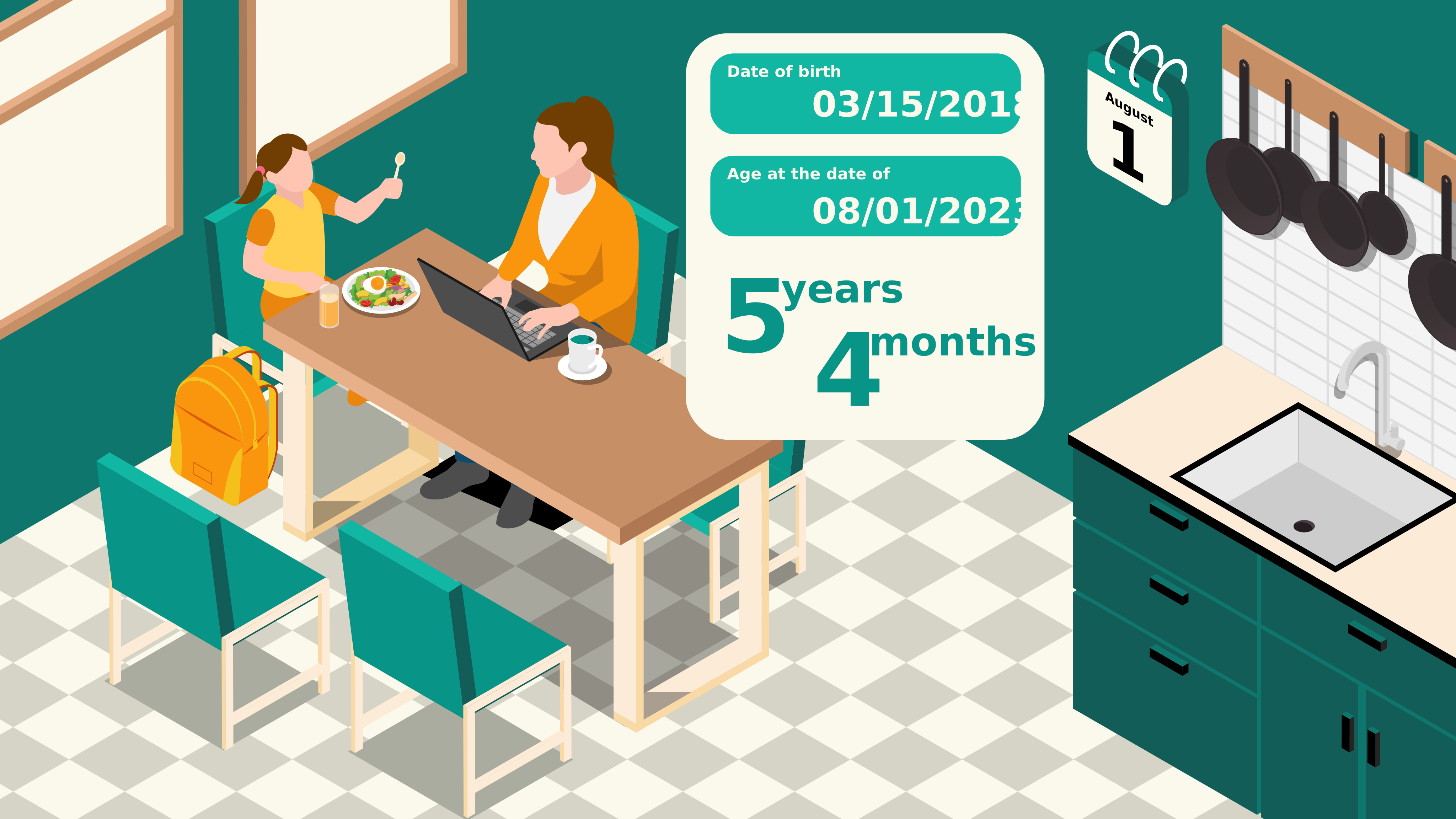
- Enter the starting date in the "Date of Birth" field, ensuring you include the correct year.
- Input the date you plan to give the gift in the "Age at the Date of" field.
- Click "Calculate" to reveal the exact duration of your relationship in days, hours, minutes, and seconds.
- Print this highly precise timeline as a decorative, framed poster for a thoughtful and unique anniversary gift.
How to Use an Age Calculator
Before diving into your time-based math, it helps to understand how the calculator works to ensure you get the most accurate results possible.
1. Gather all of the data needed for your calculation
To calculate an exact age, you must gather all the necessary data before getting started—specifically, your exact start and end times. The more specific you are with your inputs, the more precise your final results will be. For example, if you want to find out exactly how old you are right now, including your birth minute and hour will yield a far more accurate timeline than simply entering your birth day, month, and year alone.
2. Double-check that you are using the correct month and year
When calculating time differences manually, it can be tempting to take shortcuts. For simplicity's sake, some might assume that the length of time between two dates is always identical, regardless of the month. For example, one might incorrectly assume that the duration from January 4 to February 4 is exactly the same as February 4 to March 4. However, because months vary in length—ranging from 28 to 31 days—selecting the correct month drastically impacts the accuracy of your calculation.
Additionally, every leap year introduces an extra day to the calendar: February 29. When figuring out an exact age, you must select the correct year to ensure time is measured flawlessly. If you forget to adjust the year and only input the month and day, your calculation could easily be off by at least one full day.
Age Was Once Mysterious and Vague
Centuries ago, precise birth records were rarely kept—especially among the lower classes. With primitive technology and record-keeping, tracking someone's exact age was largely relative and vague unless a local church officially documented their birth or baptism. Without formal written records, people had to rely on alternative methods to estimate a person's age.
In medieval times, an individual's age was often tracked by the passing of seasons or tied to the reign of a specific monarch. Furthermore, people frequently estimated age based on biological milestones, such as when a child learned to walk or when a young woman reached puberty and was capable of giving birth. While these rudimentary age-tracking methods were sufficient for their era, the eventual standardization of birth records allowed for the highly accurate chronological age calculations we rely on today.
Human age
Did you know that you actually have more than one age? The concept of "age" spans multiple distinct definitions.
Chronological age
We possess a chronological age, a biological age, a social age, a psychological age, a subjective psychological age, and even an immune age. Let's explore how these different metrics of aging differ and whether it is possible to accurately calculate them.
Chronological age (often referred to as "passport age") is determined by the exact number of years, months, and days that have passed since a person was born. In the modern world, a person is considered 0 years old at birth, and one year of life is added on each subsequent birthday.
Korean age
Historically, several Asian countries, including China, used a completely different age-tracking system. Under this traditional system, a child was considered one year old on the day they were born. A new year of life was then added on the day of the lunar New Year, regardless of the child's actual birth date. In South Korea's traditional system, a year was added on New Year's Day according to the Gregorian calendar. Because of this, a baby born on December 31 would turn two years old the very next day. This unique cultural approach to age assessment is widely known as "Korean age."
Today, the international chronological system is utilized across Asia for official government documents and legal procedures. However, traditional age systems are still used in China for calculating astrological horoscopes.
Similarly, the traditional Japanese system of counting age—which also advanced a person's age on New Year's Day—was officially abolished by law in 1902. Yet today, this traditional system is still used by the elderly, in rural Japanese regions, and during traditional ceremonies or divinations.
Biological age
Biological age measures the physiological wear and tear on your body. Unlike chronological age, biological aging is highly individual. Someone who leads an unhealthy lifestyle will wear down their cellular health rapidly. Conversely, someone who prioritizes nutrition, exercises regularly, lives in a healthy environment, minimizes chronic stress, and possesses strong genetics will likely exhibit a much slower biological aging rate.
Because it reflects physical condition, biological age provides far more accurate insights into the risks of various age-related diseases and premature mortality than chronological age ever could.
While there is no single, universally accepted scientific test to pinpoint your exact biological age, scientists analyze several key biomarkers to determine it. These parameters include physical appearance, cardiovascular endurance, body weight, lung capacity (exhalation volume per second), hearing and visual acuity, blood pressure, and cholesterol or C-reactive protein levels.
Genetics also play a massive role in determining biological age. The field of epigenetics studies the chemical modifications that accumulate in cellular DNA over time. By analyzing a blood or saliva sample, scientists can identify specific DNA aging markers. The higher the number of aging markers a person has, the more cellular wear and tear their body has experienced.
Finally, cognitive function is a critical indicator of biological aging. Memory retention, focus, information processing speed, and the capacity to learn new skills all factor into a person's biological age.
Self-Determination of Biological Age
Without the help of specialized medical professionals and specific clinical tests, determining your exact biological age is difficult. However, certain physiological formulas can provide a surprisingly accurate estimate. One of the most famous calculation methods is the Voytenko formula. According to this model, a person's biological age (BA) is calculated using the following equations:
For Men:
$$BA = 27 + 0.22 × BPS - 0.15 × BHD + 0.72 × SHE - 0.15 × SB$$
For Women:
$$BA = 1.46 + 0.42 × BPP + 0.25 × W + 0.7 × SHE - 0.14 × SB$$
- BPS - Systolic blood pressure (the "upper" number), measured in mm Hg.
- BHD - Breath-holding duration after a deep inhale, measured in seconds.
- SB - Static balance, measured in seconds. To test this, stand on your left leg, close your eyes, relax your arms at your sides, and record exactly how long you can hold the position without losing balance.
- BPP - Pulse blood pressure, which is the difference between your "upper" (systolic) and "lower" (diastolic) blood pressure readings.
- W - Body weight in kg.
- SHE - Subjective Health Evaluation. This is calculated via a specialized 29-question medical questionnaire. In an ideal scenario, the SHE score is 0. In the worst-case scenario, it is 29.
Can Your Biological Age Be Reduced?
While it is incredibly challenging to reverse the epigenetic changes that have already accumulated in your cells, you can actively slow down the aging process. Adhering to the core pillars of a healthy lifestyle is your best defense:
- Eat a nutritious diet. Prioritize fresh fruits, vegetables, lean meats, and healthy dairy products. Limit your intake of highly processed foods and fast food.
- Stay socially active. Engage in meaningful conversations with friends, build strong community connections, and regularly attend social events.
- Maintain physical activity. Incorporate a balanced mix of regular, vigorous exercise and comfortable daily walks into your routine.
- Prioritize consistent sleep. Dedicate 7 to 9 hours a night to restorative sleep, depending on your body's individual needs.
- Learn to manage your stress effectively.
Psychological age
Psychological age refers to how old a person feels and acts, based on their mindset, emotional maturity, and behavior. Generally speaking, the younger a person feels, the healthier they tend to be—often displaying sharper memory, better learning capabilities, and a longer overall lifespan. Scientists are still unraveling the exact cause-and-effect relationship here. It is highly possible that people subjectively feel younger simply because they have successfully maintained excellent physical health and cognitive function over the years.
Understanding your psychological age can provide deep insights into your overall well-being. If you realize that you feel mentally "old," it might be the perfect catalyst to introduce more physical activity into your daily routine. In that case, you should actively seek out new social connections, explore modern technologies or hobbies, and consciously stop associating yourself with the concept of "old age." By proactively changing your lifestyle and mindset, your psychological age can naturally decrease.
How to determine your psychological age
The simplest way to gauge your psychological age is to ask yourself one profound question: "How old would you be if you didn't know how old you were?"
There are dozens of online psychological age tests designed to answer this exact question. Some rely on self-perception and behavioral expectations. Others analyze your environmental and educational background by asking questions like:
How informed are you about current global events? What are your primary interests and hobbies? What is your highest level of education?
Other assessments determine psychological age by evaluating the vibrancy of your worldview. For instance, some specialized online tests estimate your mental youth based on how your brain perceives subtle shades of color.
One of the most fascinating approaches to determining psychological age was developed by the AI-driven health company Fan Longevity. They created an artificial intelligence neural network application designed to track the aging process and help users optimize for a longer, healthier lifespan.
Researchers trained this AI by feeding it over 10,000 questionnaires completed by individuals aged 25 to 75 from around the world. The algorithm analyzed responses to the same set of questions and cross-referenced them with the participants' actual chronological age and their self-reported subjective psychological age.
The resulting test consists of 18 simple questions. To discover your psychological age, you must answer introspective questions such as:
- Looking ten years into the future, what do you expect your contribution to the well-being of others to be?
- How much does your current health limit your ability to run or lift heavy objects?
- Over the past 12 months, have you experienced a period where you felt profoundly sad or depressed for two or more consecutive weeks?
During the assessment, you must also rate your degree of agreement with various statements, including:
- Life is a continual learning process, offering constant opportunities for change and personal growth.
- I have not experienced many warm, trusting relationships with other people.
- I tend to get excited or anxious very quickly.
Social age
Social age refers to the life milestones and psychological shifts that society typically associates with specific chronological ages. This metric revolves around major, age-dependent events in a person's life, including:
- The average age of marriage.
- The timeline for beginning and completing higher education.
- The natural, age-related shifts in a person's career, outlook, and general attitude toward life.
The primary criterion for calculating social age is comparing a person's life achievements (or lack thereof) to the average progress of their peers.
Society has constructed generally accepted norms regarding when people should start families, attend university, or retire. Sociologists and researchers rely on these cultural benchmarks to establish an average social age. If an individual's life trajectory diverges significantly from this average, their social age is considered either delayed or advanced.
For example, imagine a young man who graduates from university years ahead of his peers. While his classmates are still studying, he has already entered the workforce and is rapidly advancing in his career. In this scenario, his social age is significantly higher than his chronological age, indicating early social maturity.
Ultimately, a person's social age is shaped by a complex mix of upbringing, intelligence, socioeconomic environment, and innate personality traits.
Mental age
Mental age evaluates an individual's intellectual performance and cognitive abilities at a specific point in time. To determine someone's mental age, a psychologist compares their intellectual test performance to the average intellectual performance of a broader population at that exact same chronological age.
The concept of mental age was first introduced by French psychologist Alfred Binet, who developed the world's first formal intelligence test in 1905. Binet devised a highly accurate method to calculate mental age by administering a standardized IQ test and plugging the final score into a simple mathematical formula.
$$Mental\ age = (IQ / 100) \times Chronological\ age$$
For example, imagine a 20-year-old takes an IQ test and achieves a score of 120. To calculate his mental age, the psychologist divides the IQ score (120) by 100, resulting in 1.2. The psychologist then multiplies this number by the subject's exact chronological age (20). The final result reveals a mental age of 24 years old.
Frequently Asked Questions
How do I calculate my exact age?
Enter your date of birth in the "Date of Birth" field and the date you want to measure to in the "Age at the Date of" field, then click "Calculate." The tool returns your exact age in years, months, days, hours, minutes, and seconds. Including your birth hour and minute yields a more precise result than the day, month, and year alone.
How old am I in days, hours, and seconds?
An online age calculator converts the gap between your birth date and today into days, hours, minutes, and seconds automatically. This bypasses the limitations of a standard calculator, which struggles with time because months vary in length from 28 to 31 days and leap years add an extra day, February 29.
Do I really have more than one age?
Yes. Beyond your chronological age you also have a biological, psychological, social, and mental age. Chronological age counts the exact time since birth, while the others reflect physical wear on your body, how old you feel and act, your life milestones versus your peers, and your cognitive performance.
What is chronological age?
Chronological age, sometimes called "passport age," is the exact number of years, months, and days that have passed since a person was born. In the modern system a person is considered 0 years old at birth, and one year is added on each subsequent birthday.
What is Korean age?
Korean age comes from a traditional Asian counting system in which a child is considered one year old on the day they are born, with a year added on New Year's Day rather than on the actual birthday. Because of this, a baby born on December 31 would turn two the very next day. Today Korea uses the international chronological system for official and legal purposes.